by Joel Nkongolo | Nov 4, 2025 | Campaigns and UN Events, COP 30
As the world prepares for COP30 in Belém, Brazil (November 10–22, 2025), understanding key climate terms and past achievements is essential to engage meaningfully in this global journey toward justice and sustainability. Terms like Adaptation, Mitigation, and Just Transition define the heart of the climate response—reducing risks, cutting emissions, and ensuring fairness for all. Concepts such as Loss and Damage, Climate Finance, and the Loss and Damage Fund highlight global solidarity with the most vulnerable nations, while frameworks like Nationally Determined Contributions (NDCs) and the Global Stocktake ensure accountability and progress toward the 1.5 °C goal. Reflecting on past conferences—COP26 (Glasgow), COP27 (Sharm el-Sheikh), COP28 (Dubai), and COP29 (Baku)—we see major milestones like the creation of the Loss and Damage Fund, the Global Stocktake, and rising commitments to renewable energy and adaptation finance, despite ongoing challenges such as insufficient emission targets and fossil fuel dependency.
Download the complete PDF to explore these key terms, lessons from past COPs, and how they guide our faith-based call to care for creation and act for climate justice.
ENGLISH | ESPAÑOL | FRANÇAIS | PORTUGUÊS
by Joel Nkongolo | Nov 4, 2025 | Campaigns and UN Events, COP 30
The 2025 United Nations Climate Change Conference (COP30), set for November 10–22, 2025, in Belém, Brazil, promises to be a historic gathering for a just and sustainable future. Taking place in the heart of the Amazon rainforest, this milestone event calls the world to protect biodiversity, uplift Indigenous and local communities, and renew global commitment to the 1.5 °C climate goal. The Claretian Team at the United Nations, representing the Congregation through Fondazione Proclade Internazionale-onlus, will be present with Fr. Rohan Dominic, CMF, Fr. Joel Gaspar Beltrami, CMF, and Prof. Deusdedith Ferreira Araújo, championing faith-based advocacy and ecological spirituality. In the lead-up, the team will share Countdown Reflections (October 25, 31, and November 8) and daily insights from Belém throughout the conference—connecting faith, justice, and action for our common home.
Discover the full story, reflections, and daily updates in the complete PDF below—join us on the journey toward climate justice!
ENGLISH | ESPAÑOL | FRANÇAIS | PORTUGUÊS
by Joel Nkongolo | Apr 12, 2025 | Claretian Mission Day
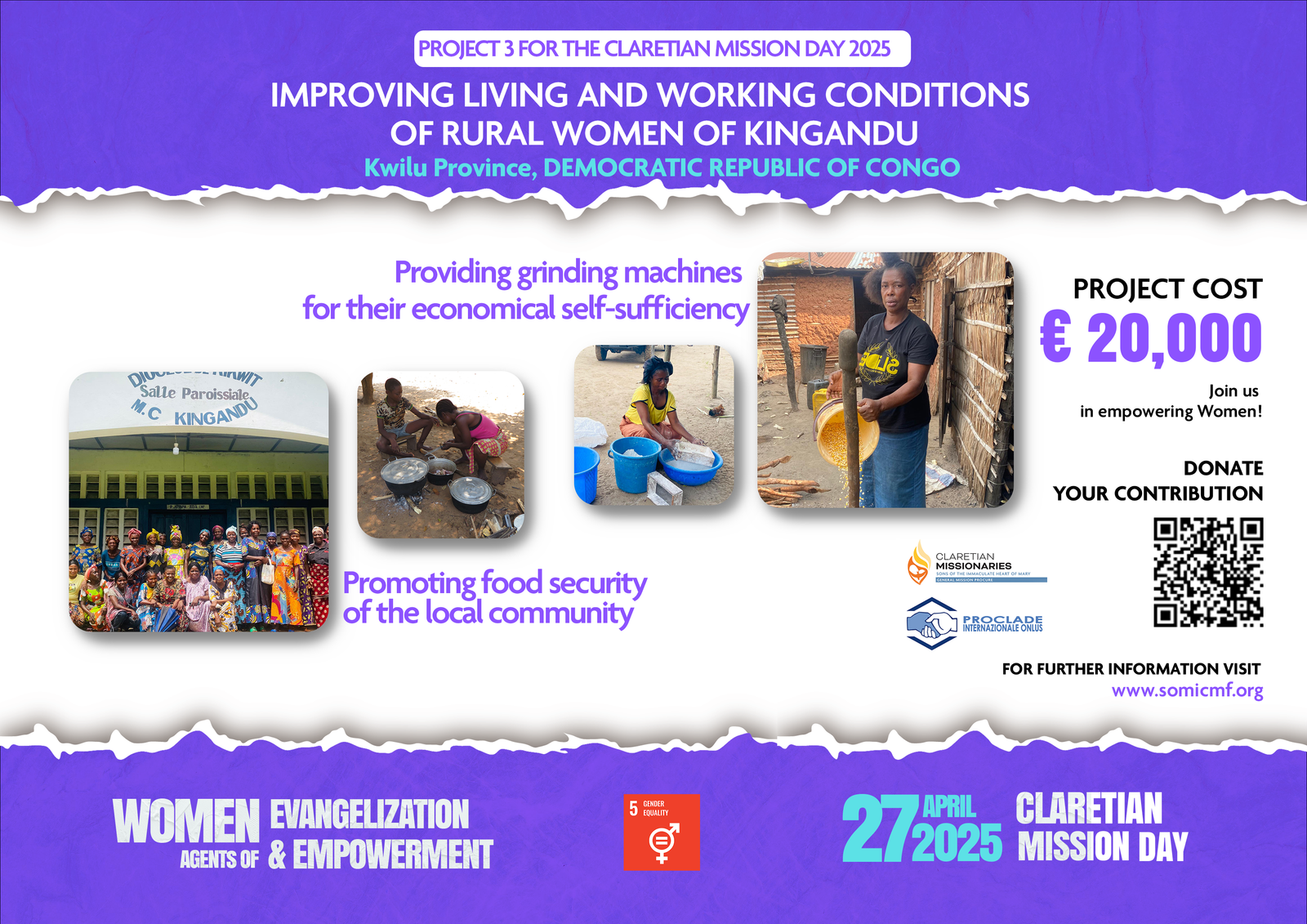
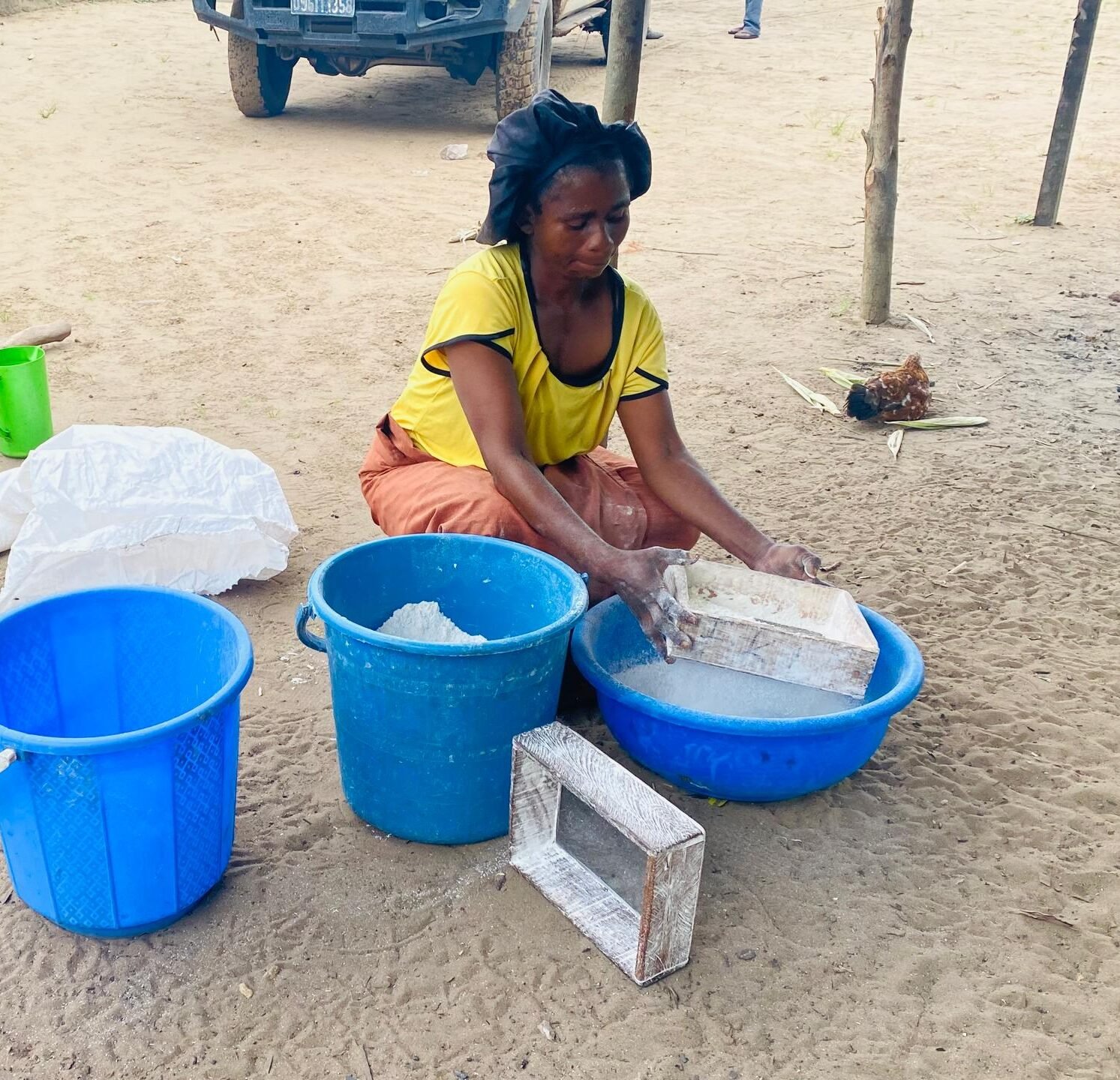
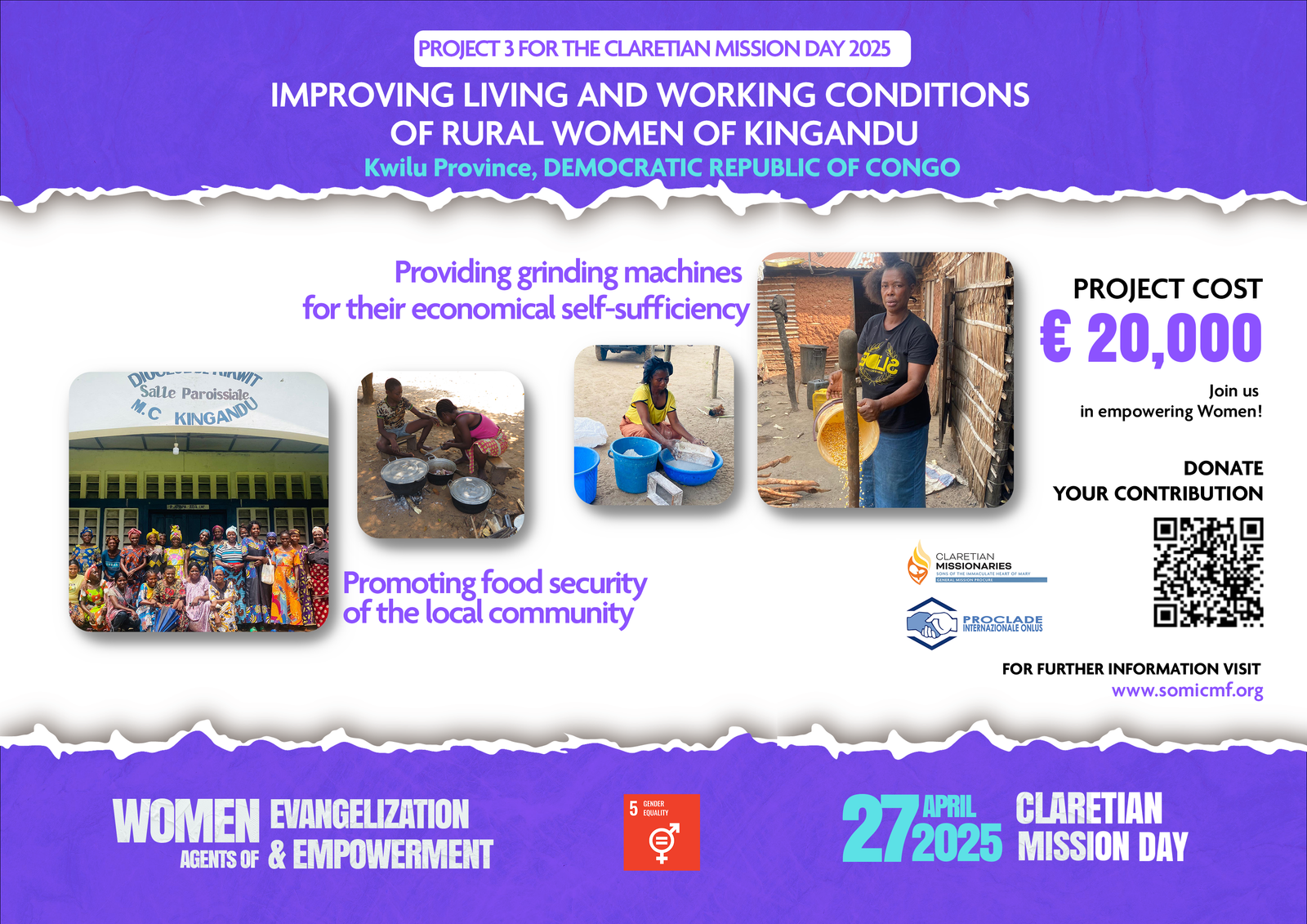
This project will be implemented in Kingandu, a rural village located 650 km southwest of the capital, Kinshasa. The local population primarily relies on agriculture, fishing, livestock farming, and small-scale trade for their livelihood. The women of Kingandu, who are responsible for harvesting, face significant challenges in processing millet, maize, and cassava. They spend a great deal of time and energy on traditional milling methods for cereals and cassava. The amount to be milled can exceed 50 kilograms per day, requiring several hours of hard labor just to prepare a single meal, as fufu is the staple food for dinner.
This situation prevents women from taking better care of their families and engaging in other activities that could generate income for their self-sufficiency. Through this project grinding mill machines will be provided to the women. The objective of this project is to help them improve their techniques and strengthen their skills, reduce the physical effort required for this task, and ultimately enhance their living conditions.
by Joel Nkongolo | Apr 12, 2025 | Claretian Mission Day
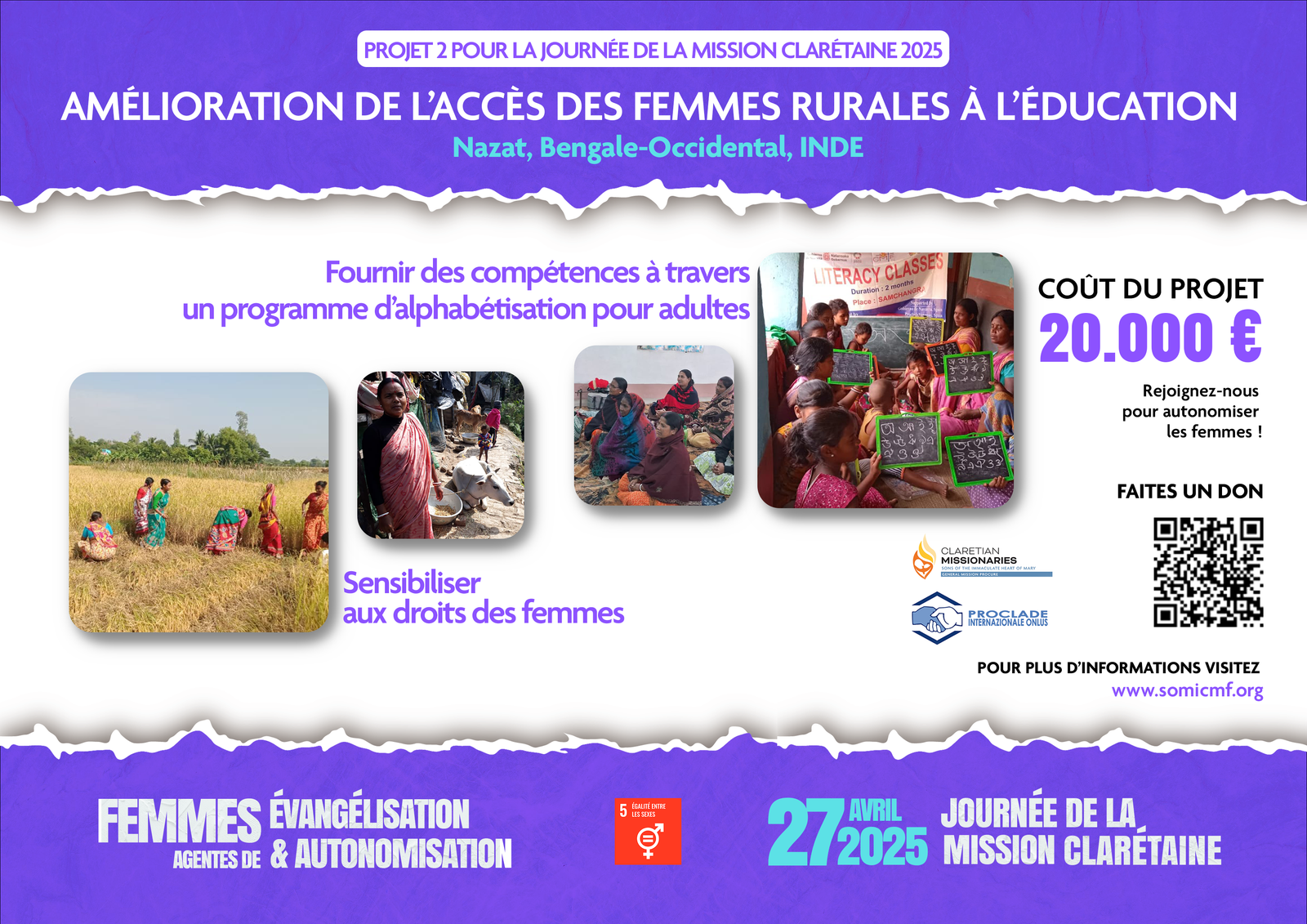
This project aims to help break the cycle of extreme poverty through education, awareness, and capacity-building, enabling
women to achieve sustainable livelihoods
and lead a dignified life.
Women in the Nazat region, like many in West Bengal, have limited access to education and, in many cases, lack alternative means to earn a living.
It is extremely difficult for women, especially those from
rural areas, to find paid employment since they often lack
qualifications and/or are the primary caregivers
responsible for household duties.
This project aims to empower 200 women in Nazat by
providing an adult literacy program and implementing
awareness initiatives to educate them about their rights
guaranteed by the Government of India.
by Joel Nkongolo | Mar 28, 2025 | Claretian Mission Day
Santa María de Jesús is a community that preserves its native language and traditional clothing. In fact, its population is 99.5% Maya Kaqchikel. Guatemalan Indigenous women are considered transmitters of historical and cultural memory. Today, in Guatemala, it is primarily women who weave and wear traditional garments, crafted using the backstrap loom. The production of Maya textiles, alongside agriculture, is one of the main pillars of the economy in these communities and a crucial source of employment for women.
The women’s weaving group Aj Piecha from Santa María de Jesús actively defends their ancestral textile art against plagiarism, fashion trends, and the decline of traditional Maya clothing. This project aims to empower Guatemalan women and safeguard their identity and socio-economic well-being by providing materials for textile production, organizing classes, workshops, and
events that highlight their ancestral art, culture, and historical significance.